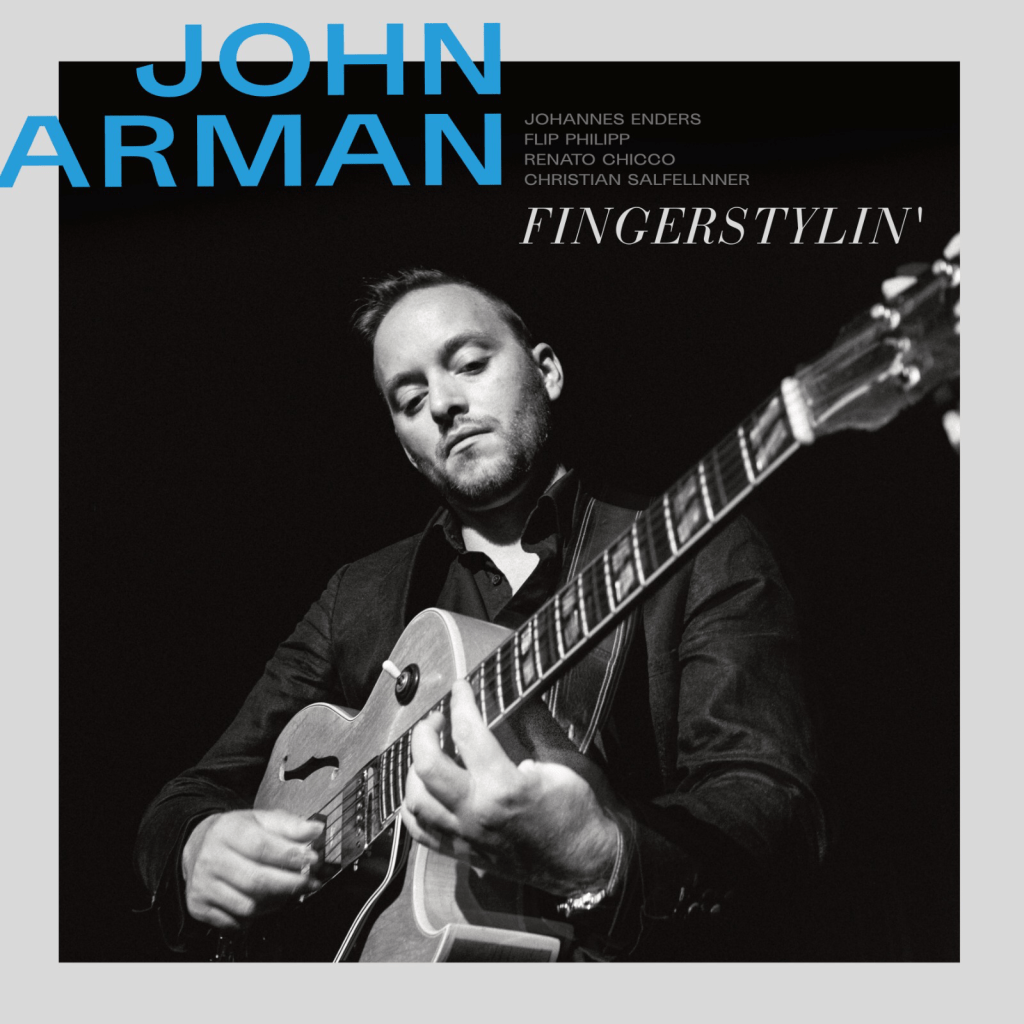
John Arman: Fingerstylin’ (GGM-26-6)
Personnel
John Arman – guitar
Christian Salfellner – drums
Renato Chicco – organ
Johannes Enders – tenor saxophone
Flip Phillipps – vibraphone
Track List
- Tiny Leaps
- Bright Shiny Beats
- Double Moon
- So That
- Fingerstylin’
- The Lamp Is Low
- Tenderly
- The Swag Bag
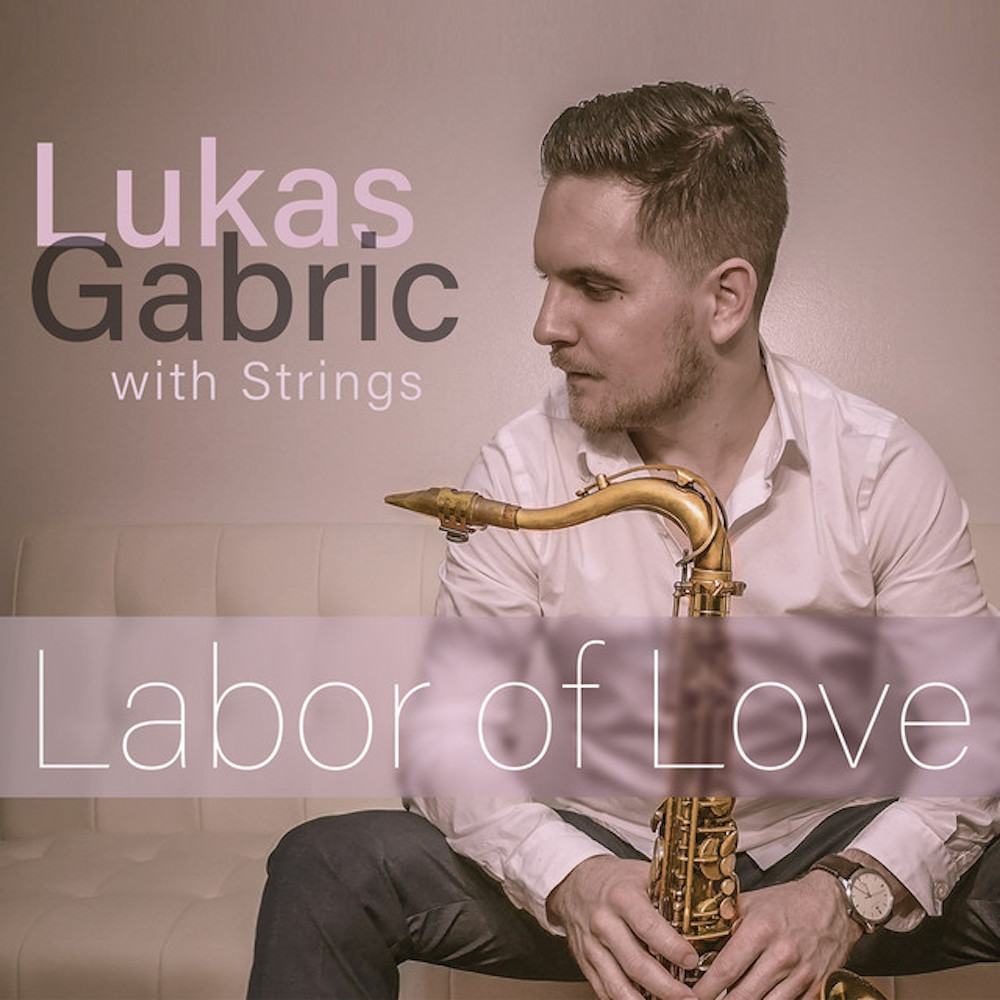
Lukas Gabric: Labor of Love (GGM-26-4)
Liner Notes by Joel Frahm
When Lukas Gabric asked me to write a bit about this excellent new recording, I knew it would be a pleasure to sit and listen to his playing before I had heard a note, I’ve known Lukas for more than a handful of years at this point and have had the pleasure of observing his growth from a young saxophonist of great potential to a fully developed mature artist. That maturity is possibly what strikes me the most about his playing on this recording. I hear the beautiful richness of his tone, the seamlessness of his phrasing, the consistency and mastery of time and swing. He shows admirable restraint and tenderness on the lovely string arrangements of ballads such as “Nancy” and “I’m Glad There Is You”, and then some jaw-dropping tenor virtuosity on “Monochrome” and “Momentum”. This is a saxophonist in full control of what he wants to project with the chops and confidence to do it. He shows the wisdom to really vary the mood of the program of the record which keeps me intrigued as a listener and highlights the dynamics of his playing in a dramatic way; a strategy I truly appreciate. Lastly, and most importantly, I hear him playing with real heart and gusto, which is what I always want to experience the most when listening to a great jazz player. I am proud of the musician that Lukas has become, and I know this recording will be a wonderful reaffirmation of his artistry to those who already know his playing, and an exciting introduction for new fans as well. Enjoy the lovely music.
Tenor Saxophone – Lukas Gabric
Piano – Mátyás Gayer
Drums – Manuel Weyand
Bass – Mátyás Hofecker
Cello – Charlotte Lang
Viola – Jurij Gracej
Violin – Alma Gunzek, Ana Marija Jurečič
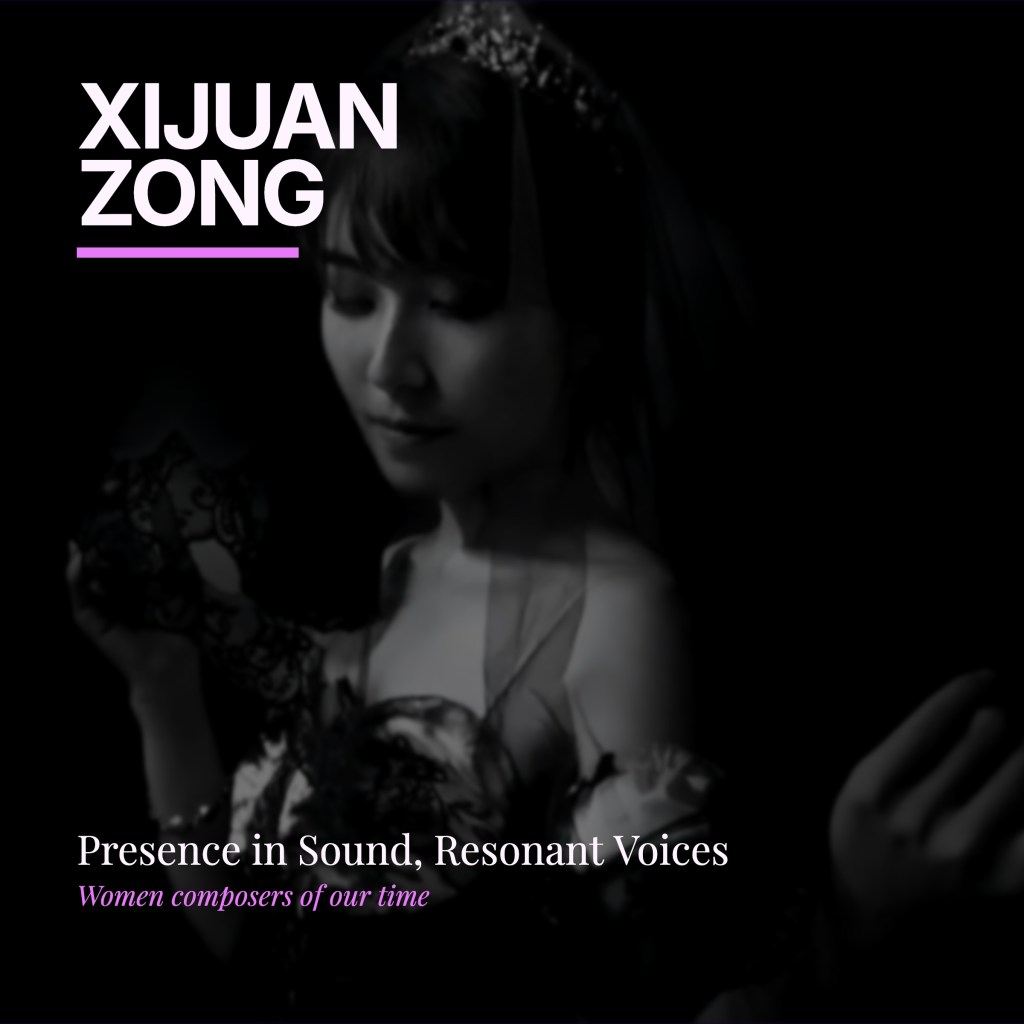
XiJuan Zong: Presence in Sound, Resonant Voices: Women Composers of Our Time (GGM-26-3)
Pianist Xijuan Zong is a concert pianist based in the United States. Her repertoire spans both traditional and contemporary works, reflecting a broad engagement with the piano literature.
Her playing is shaped by an attention to sound, color, and expressive detail, with an approach that seeks balance between structure and imagination. She is drawn to repertoire that offers distinct musical perspectives, creating performances that are both thoughtful and immersive.
Zong has presented solo recitals in cities including Boston and New York, where her performances have connected with audiences through a nuanced and expressive musical voice.
Presence in Sound, Resonant Voices brings together a selection of piano works by living women composers, centered on music that remains less frequently performed and recorded. The program features compositions by Gabriela Lena Frank, Kathryn Salfelder, and Courtney Bryan, each offering a distinct and individual approach to sound, form, and expression.
Rather than presenting familiar repertoire, the project reflects a deliberate choice to engage with works that expand the listening landscape. These pieces explore the piano through varied textures and gestures, moving between lyricism, rhythmic vitality, and subtle shifts in color.
Through this recording, Xijuan Zong approaches each work with sensitivity to its unique character, shaping a program that highlights both the individuality of these voices and the broader resonance of contemporary piano music today.
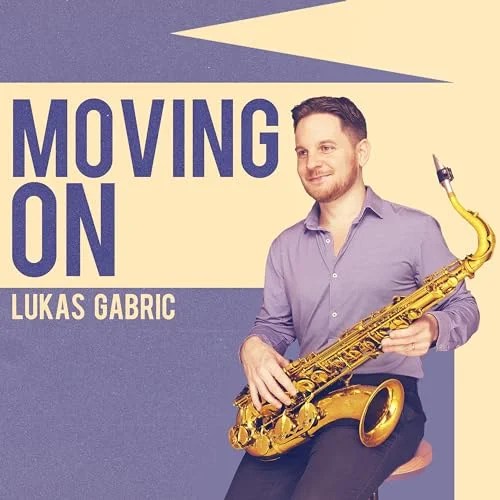
Lukas Gabric: Moving On (GGM-26-5)
Track List
- Moving On
- Got to Be
- Sai Ma
- 9:29
- Life on Hold
- Love Walked In
- Dedication
- Riff for Griff
- My One and Only Love
Personnel
Lukas Gabric – tenor saxophone
John Arman – guitar
Matyas Bartha – piano
Danny Ziemann – bass
Klemens Marktl – drums
Dušan Novakov – recording engineer
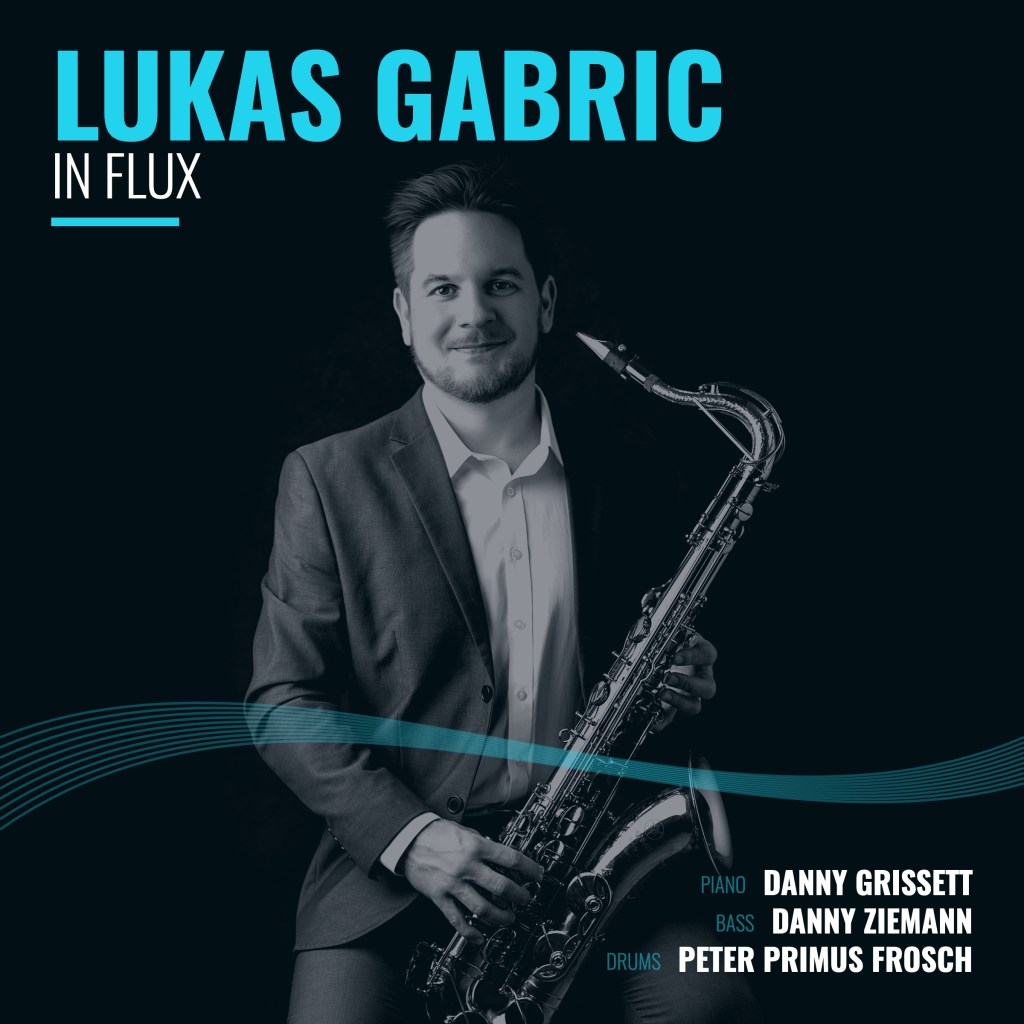
Lukas Gabric: In Flux (GGM-26-1)
This album features seven original compositions by saxophonist Lukas Gabric
Lukas Gabric – Tenor Saxophone
Danny Grissett – Piano
Peter Primus Frosch – Bass
Danny Ziemann – Drums
Recording, Mixing, Mastering – Danny Ziemann
Recorded at Hideout Studios in Vienna
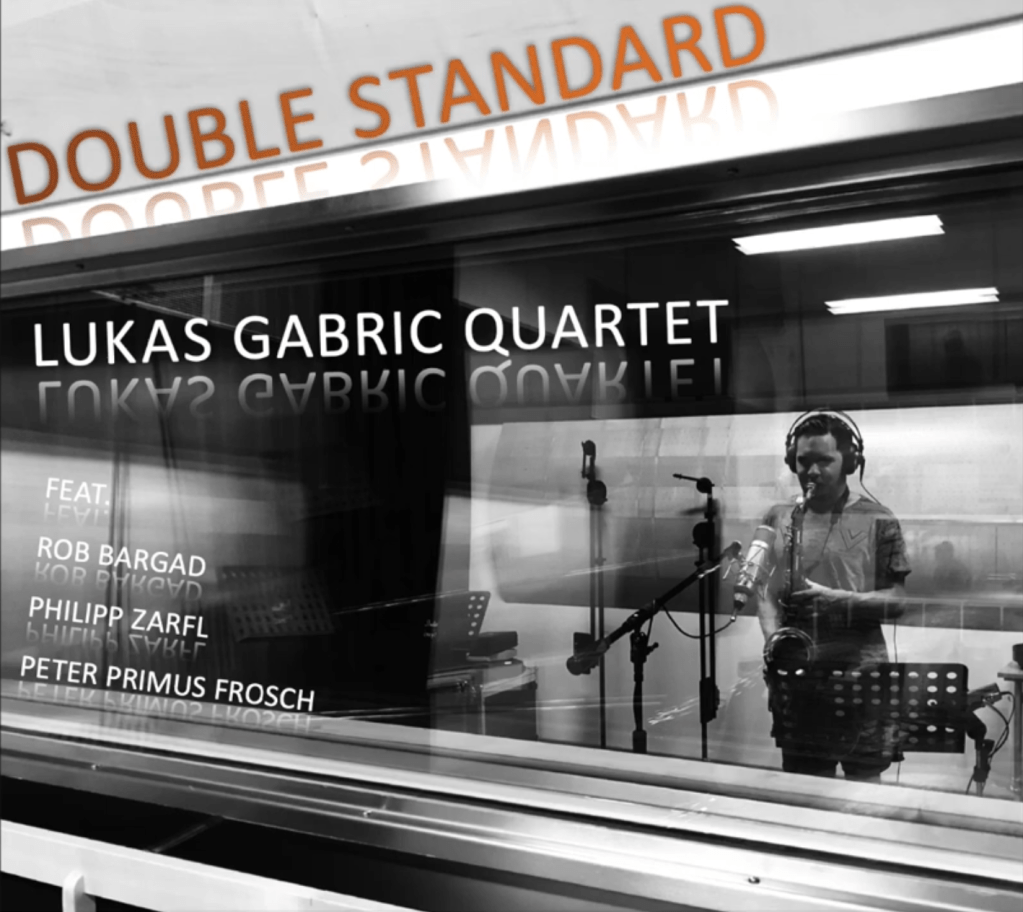
Lukas Gabric: Double Standard (GGM-26-2)
Lukas Gabric – tenor saxophone
Rob Bargad – piano
Philipp Zarfl – bass
Peter Primus Frosch – drums
Liner Notes by Walt Weiskopf
Since I was lucky enough to teach Lukas Gabric over ten years
ago during his time at the New School in New York City he has accomplished many
things in music. He has written excellent books on jazz improvisation, he is a
distinguished musicologist, academic, and best of all (from my admittedly
narrow point of view): a great player and composer. Lockdown, Lukas’
second album as a leader is all about the exploration of the medium of the jazz
quartet led by the quintessential saxophone/leader in the tradition of other
jazz greats who have traveled this path.
The musicians Lukas has assembled for this project are
beautifully well-matched. Rob Bargad (piano) is well-known as a leader in his
own right. He functions here perfectly as the consummate pianist with no other
agenda than to compliment and contribute his great piano playing to Lukas’
music. The completion of the quartet with fellow Austrians Philipp Zarfl (bass)
and Peter Primus Frosch (drums) reflects a preference for sidemen who can
immediately bring all their talents to the table. They are both virtuosic,
earthy, and above all: swinging.
“Double Standard” is a perfect lead-off, showcasing the band’s
essential love of this music in the shape of an original tune reflecting the
tradition that has drawn so many jazz fans to the fold. It’s egoless and draws
you right in.
“At the Mercy” is a reference to the endless frustrations of the
visa process from the standpoint of those who love life in the U.S. but are not
citizens. As a native of Austria, Lukas has this perspective having studied in
New York. Like many college graduates, it felt natural to stay where he had
lived, worked, and made friends but for someone dependent on a visa to stay in
the U.S., the prospect of having to leave is always looming. The loping 12/8
feel of this tune is evocative of the constant uncertainty felt by those of our
piers living here who feel their fate is in the hands of bureaucracy.
“Road Trip Melody” is an up-tempo ride showcasing in the
introduction and interlude a relatively uncommon linear device in jazz, the
augmented scale. Without getting too technical – let’s just say it’s tricky;
but the trickiest part of this display is how natural these musicians make it
sound. A lay person will likely hear this tune as inspiration to “put the pedal
to the metal,” which is the best thing about it.
After the twisting and turning head in “Blue Zone” the band
settles quickly into a swinging 12-bar blues; the foundational form of jazz
that always endures. The way in which this band plays the blues shows a
fundamental familiarity and ease with this most basic jazz form.
Following “Blue Zone” is another mainstay of the jazz tradition.
“Mahalo” is a lovely original ballad inspired by the beauty of Hawaii where
Lukas spent his honeymoon. Here is a chance to enjoy and admire the honest
intensity of the sound Lukas gets on the tenor saxophone.
One hardly needs mention the influence of the great John
Coltrane on Lukas Gabric, on this project and virtually all jazz musicians
influenced by this great icon in our music. “Lockdown” is a “tip-of-the-hat” to
Coltrane’s composition “Countdown,” which has inspired so many jazz musicians.
On hearing “Lockdown” for the first time I had the same reaction as when I
heard “Countdown” – better pick up that horn and practice!
My only clue about the driving and earnest standard-like “What
You Are” was the title – an apparent reference to Jerome Kern’s “All the Things
You Are.” I guess I’m not the only jazz musician obsessed by this enduring
standard. Lukas has a theoretical basis to explain the structure of this tune
but it’s not strictly a “contrafact” (in jazz — a “contrafact” refers to an
original melody based on a pre-existing chord progression). A good way to
compliment this tune is to observe that it’s an original composition that
sounds like a great standard. A perfect conclusion to a great album.
As a student, Lukas was low maintenance; always prepared, Lukas
presented with confident humility such that I was never surprised in the years
that followed with his consistent success. This level of artistry does not come
easy – it’s the product of raw talent combined with persistence, hard work, and
the evident and apparent love for an artform. Lukas has mastered the tenor
saxophone; seemingly flawless technique, a great big warm sound, and great
notes streaming out of the horn. All of Lukas’ compositions on this album make
for excellent listening. Beautifully crafted and satisfying to the ear;
“Lockdown” is a terrific collection.
– Walt Weiskopf, September 2021
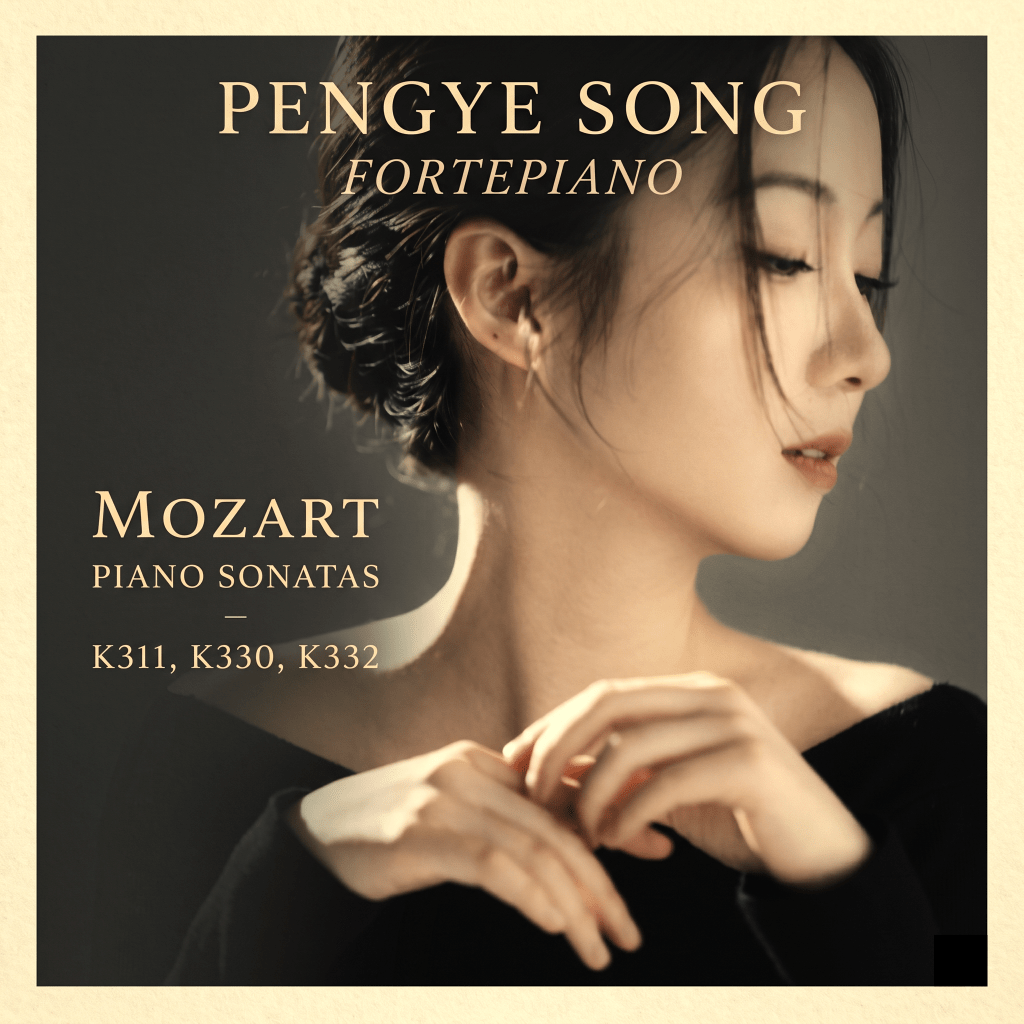
Pengye Song: Mozart Piano Sonatas K311, K330, K332 (GGM-26-7)
Wolfgang Amadeus Mozart
Piano Sonata in D major K.311
i. Allegro con spirito
ii. Andante con espressione
iii. Rondeau: Allegro
Piano Sonata in C major K.330
i. Allegro moderato
ii. Andante cantabile
iii. Allegretto
Piano Sonata in F major K.332
i. Allegro
ii. Adagio
iii. Allegro assai
Much has been written about ‘Mozart’s own piano’, housed today at the composer’s Birthplace Museum in Salzburg. Mozart acquired the instrument, most likely made by Anton Walter, at some point between settling in Vienna in the spring of 1781 and March 1785, when it is first mentioned in a letter sent home by his father during a visit to the imperial Habsburg capital. While the modern restoration of Mozart’s fortepiano raised questions about authenticity, thanks not least to its use of steel strings, it sparked interest in eighteenth-century pianos, long neglected relics that, when studied closely, revealed a teeming diversity of touch, tone colours and shadings. The young Mozart was familiar with an almost equally diverse range of keyboard instruments. Whether in Salzburg or on the road as a travelling wunderkind, he enchanted listeners with performances given on harpsichord, clavichord, organ or pantalon, a sophisticated form of hammered dulcimer popular in the German-speaking world.
Mozart’s interest in the German fortepiano took hold in October 1777 in Augsburg, his father’s hometown, while en route to Paris. Here he visited the organ and keyboard instrument builder Johann Andreas Stein at his Ulrichsplatz workshop. Stein persuaded him to prolong his stay by organising a concert, at which Mozart played on three of Stein’s recently finished fortepianos. ‘In whatever way I touch the keys,’ Mozart wrote to his father, ‘the tone is always even. It is true that he does not sell a pianoforte of this kind for less than three hundred gulden, but the trouble and the labour which Stein puts into the making of it cannot be paid for. His instruments have this special advantage over others that they are made with escape action. Only one maker in a hundred bothers about this.’
The keyboard sonatas Mozart composed during his childhood years were conceived for harpsichord and later reworked for publication, to suit the prevailing fashion, with optional violin (or flute) parts. A handful of sonatas for solo keyboard from this period were documented but have been lost; he probably wrote others of which no trace has survived. His earliest surviving keyboard sonatas, K.279 to K.284, six fascinating works clearly created with the fortepiano in mind, were composed in Munich between mid-January and early March 1775. During Mozart’s months in Munich, the innkeeper and vintner Franz Jospeh Albert arranged for the 19-year-old musician to take part in a keyboard competition at the Black Eagle Inn with Franz Ignaz von Beecke, Musikintendant to Prince Karl Kraft von Oettingen-Wallerstein. The duel was conducted on Albert’s own fortepiano, an instrument of considerable quality; it is possible, perhaps likely, that Mozart used Albert’s piano to compose his first solo sonatas.
Mozart returned to the solo sonata in the closing months of 1777. Having left Augsburg, he and his mother arrived at Mannheim in late October. He began by composing a piano sonata for the keyboard-playing teenaged daughter of Christian Cannabich, director of the Elector of Bavaria’s celebrated court orchestra. Its immediate successor, the Piano Sonata in D major K.311, was finished by mid-December; most scholars now agree that it was not, as was once believed, written in September, before the Mozarts left Munich, where Wolfgang had promised to compose a sonata for the daughter of one of his father’s friends. The work opens with a jubilant Allegro con spirito, cast in sonata form. The movement’s two thematic subjects are organically linked by the transformation of the first theme’s upward staccato scale into a descending legato scale in the second. Mozart caps the exposition with an apparently throwaway falling motif which grows in stature when it is recalled and extensively reworked in the development section. The repetition of the development and recapitulation amplify the vitality of the movement’s dashing right-hand scales and delightfully robust figuration in the left hand.
The Andante con espressione brings out the fortepiano’s lyrical voice. Its main theme is built from two interdependent phrases followed by what the musicologist William Kinderman aptly calls a ‘serene postlude’. While the regular recurrence of the theme (and a secondary idea, preceded by three repeated chords) suggest that the movement is cast in rondo form, Mozart complicates matters by wrapping his themes with elaborate ornamentation. The rondo proper follows in the form of an ebullient Allegro finale in 6/8 time, albeit one with ample room for relaxed episodes between statements of the main theme and a short, concerto-like cadenza. The latter prefaces an ingenious development of the main theme, in which the keyboard evokes the dialogue between a concerto soloist and full orchestral ensemble.
Mozart rarely performed his piano sonatas at public concerts. The genre was conceived for domestic consumption, to be played by wealthy, often accomplished amateurs in their private drawing-rooms or used as teaching pieces. The Piano Sonatas K.330 and K.332 belong to a group of three that Mozart composed during his final visit to Salzburg, made in company with his wife Constanze from July to November 1783. That they may have been created for didactic purposes is suggested by the composer’s use of the soprano clef in their right-hand parts, rather than his customary treble clef; in addition, the works’ autograph manuscripts contain precious few of the dynamic and articulation markings that were added to their first editions, published by Artaria in Vienna in 1784, leaving open the possibility that Mozart’s pupils were encouraged to create their own interpretations when working from his hand-written scores. Whatever their intended function, each of the three sonatas reflects their composer’s boundless inventive brilliance.
Improvisation at the keyboard was an essential part of Mozart’s creative toolkit. He was not confined by plain notes on a handwritten or printed page; indeed, he and his contemporaries were expected to enhance the given text of a piece with a wide range of additional rhetorical details, from melodic ornaments and embellishments to dynamic contrasts and personal responses to the music’s emotional temper. Pengye Song’s sonata interpretations strike a finely calibrated balance between respect for the score and the need to cultivate what Mozart himself referred to, in a letter to his sister Nannerl, as galanterie, a performance style rich in subtle nuances, feeling, imagination and tasteful decoration. We have an idea of the composer’s manner of melodic improvisation from the ornamented version of a passage from the Andante of his Piano Concerto No.16 in D major K.451 that he notated for Nannerl and which surely reflects his own performance practice.
The Piano Sonata in C major K.330 stands as the very model of Classical poise and balance. The demeanour of the first movement, with prominent upward-sweeping figures in its first theme and an utterly charming, songful second theme, remains relentlessly cheerful. Even the reflective minor-key modulations and dynamic contrasts of its development section feel like the welcome shade of passing clouds on a hot summer’s afternoon; Mozart’s subtle variations to both themes in the recapitulation underline the movement’s gravity-defying lightness. The emotional register becomes more complex in the sonata’s central Andante cantabile, growing in intensity with each of its repeated sections until the curtain parts to reveal a scene overcast with sadness, delivered in the key of F minor. A four-bar prelude, added late in the composition process, precedes the return of the main theme in its original F major, reinforcing the expressive contrast between the two modes. Mozart added a major-key version of his four-bar idea to the work’s published version, gracing the movement with a tender epilogue.
Any residual trace of darkness is dispelled with the Allegretto’s restoration of the irresistible force of optimism. The finale begins by presenting two lively themes; rather than developing them, as he did in the opening Allegro, Mozart provides the aural equivalent of a jump-cut with a diversion to a central interlude infused with the flavour of folksong. A short sequence of repeated two-note figures, each punctuated by brief rests, heralds the elegant transition back to the main theme. The movement is crowned by three majestic chords, rounding off the somewhat inconclusive phrase from the close of the exposition with a decisive ending.
Within the bounds of a simple sonata form, Mozart packs a breathtaking array of thematic ideas and contrasts into the first movement of his Piano Sonata in F major K.332. Its main theme is built from at least three ideas, each of which would be at home on the opera stage: the first flows like a lyrical aria; the bright-and-breezy second carries comic connotations; the third, spun in the key of D minor, sounds like it belongs to an orchestral overture. Complexity likewise runs through the elements of the second thematic group, the eloquent lightness of which is offset by a striking detour into C-minor territory. Mozart appears to be experimenting here, an impression confirmed by the arrival of a completely new theme at the start of the development.
While the early 1780s proved lean times for Mozart in his work for the stage, he evidently transferred the concept of dramatic characterisation to his F-major piano sonata. Shades of opera pass over its Adagio, an exemplar of refined expression in which profound emotions are conveyed without a single rough edge troubling the movement’s lyricism. In his autograph score, Mozart indicated a straightforward repeat of the first half; the published composition, however, contains extensive ornaments and embellishments, most probably supplied by the composer himself. These surely offer a model of what he would have expected his pupils to add to the repeat of an unadorned melody.
Beyond imparting pianistic showmanship to the sonata’s finale, Mozart reinstates the complexity that proved such a captivating presence throughout the first movement. The Allegro assai owns at least six independent thematic ideas; it also makes striking use of brief silences, which collectively play a distinct, if minor role in the movement’s dramatis personae. Mozart takes delight in the contrast of timbres between the fortepiano’s upper and lower registers, launching the finale with a sonorous left-hand chord followed by scampering figuration in the right hand. Contrasts between major and minor, dynamics, rhythmic accents and fine points of articulation further enliven and enrich the music, drawing the listener deep into a world teeming with life, in which themes come and go like fairground entertainers, some richly comic, others carrying heavy emotional baggage. These characters appear again in the recapitulation, albeit in modified to prepare the ground for a perfectly judged repeat of the rising chromatic figure from the first thematic group and the gentlest of codas, the reassuring signifier of a happy ending.
[Andrew Stewart: 1593 words]
 Global Gate Music